
Man, I hit a wall last year. I’m talking a concrete, steel-reinforced wall that just appeared out of nowhere. Everything was going great one minute, and the next, it was like the whole universe decided I needed a serious life lesson. I’d been hustling for a solid six months on this little side gig, poured every spare dollar into it, hoping to finally jump ship from the miserable, thankless day job I had. I was done with punching the clock, you know? But the gig just… stalled. Completely. Dead in the water.
I was in a financial hole, deep enough that I couldn’t see the sunlight. The landlord was calling, the credit card bill was getting fat, and just when I thought I couldn’t sink lower, the old truck decided it had enough, too. Fuel pump blew out right on the freeway ramp, three miles from home. I sat there, smelling oil and despair, looking at a stack of bills I couldn’t cover and a useless pile of metal that was supposed to get me to my next temporary job. I seriously thought I was going to lose everything. The shame was the worst part, feeling like a total failure after pouring my whole heart into making a change.
I remember dragging myself home that night, feeling like I had nothing left to give, spiritually or physically. I was broke, beat up, and just started going through my old junk in the attic. Found that deck of Tarot cards my cousin gave me ages ago—you know, the one I used mostly for laughs and the occasional party trick. I just needed some kind of sign, honestly. I wasn’t even asking for good news; I just needed to know which direction to crawl in. Should I beg for my old job back? Should I sell the damn truck for scrap? I was totally lost at sea.

The Scales Tipped, But Not How I Expected
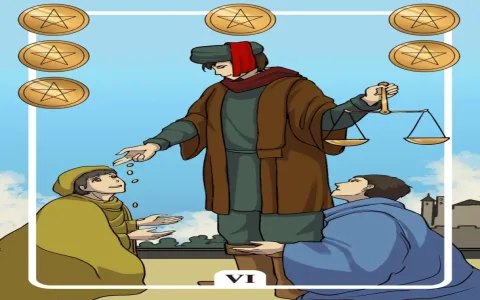
I shuffled that deck maybe three times. Didn’t even try to do a fancy spread. I just needed a gut check. I pulled one card. Only one. And there it was: the Six of Pentacles. Upright. I didn’t know what it meant at first. All I saw was this wealthy-looking dude, holding a scale, handing out coins to two others who looked like they were kneeling or receiving something vital. My immediate, gut-reaction thought was, “Great, I’m one of the kneeling guys right now. Perfect. I have to wait for someone else to save me.” I threw the card back on the table, annoyed that it basically confirmed my current state of need, and went to bed.
But the image stuck in my head. A couple of days later, I was talking to my old buddy Mike. Mike and I go way back, high school stuff, but we hadn’t really connected deeply in months. I called him up, not to ask for anything, just to vent, just to get the mess out of my head. I told him about the truck, the failed gig, the rent, the whole catastrophic mess. He’s always been chill, listened quietly, didn’t interrupt once. Then, when I finally ran out of gas, he just said, “Look, I got a decent bonus last month. Don’t sweat the rent. I’m covering it this month. Seriously. Don’t even think about it. Pay me back when you feel like you can breathe again.”
It hit me like a ton of bricks. That was the card. It wasn’t some mystical lottery win or a job offer landing in my lap out of the blue. It was Mike. He was the guy on the card, balancing the scales for me in that exact moment. He was sharing his current prosperity to lift me up. I felt this huge wave of relief, obviously, but also this massive sense of dignity. This wasn’t just charity, it was trust, and it came with the understanding that once I was stabilized, I had to keep that energy moving.
My Practice: Keeping the Flow Going
The first thing I did after I fixed the truck and landed a small contract was figure out how to be the person with the scales for someone else. Not necessarily with cash, because I still wasn’t rolling in it, but with what I had. That’s the real lesson of the Six of Pentacles, man. It’s not just about the dollars; it’s about making sure the energy keeps circulating. If you’re full, you share the excess so someone else can become full, too.
- I volunteered a few weekends down at the local soup kitchen, just serving food, talking to people. No big deal, but it felt right, giving my time when I couldn’t give money.
- I saw a newer guy at the coffee shop—a total kid—struggling with his first website and a mess of code. I spent four hours helping him sort out his network configuration and the backend. He tried to pay me twenty bucks, and I just laughed, told him to pay it forward.
- I fully repaid Mike, yeah, but I also bought him a ridiculously nice bottle of whiskey and covered his dinner just to say thanks for the belief he showed when I had none left.
The whole picture clicked when I stopped seeing the card as “being rich and giving money to the poor” and started seeing it as balancing the scales when someone needs it. Mike had the wealth (in that moment), and he shared it. I got it, and then I had to share my own resources, even if it was just time or skill. It is about equal exchange over the long run, not just a one-time handout. The card is a constant reminder: you’re gonna be on both sides of that exchange. You’re gonna need help, and you’re gonna have the power to give it. You just gotta make the conscious choice to keep the circulation going.
You can’t hoard it, whether it’s skill, money, or good fortune. If you hoard, the whole system just freezes up. And now, given a choice, I’d rather be the one with the scales, making things fair, than the guy on the freeway ramp smelling oil and looking at a useless pile of metal.