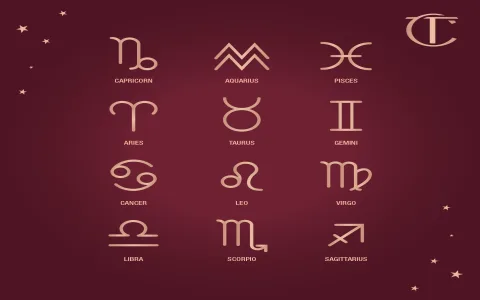


You know how life throws these little annoyances at you, the ones that are so small they shouldn’t matter, but they just keep happening? That was me, dealing with my auntie’s daily horoscope addiction. She’s a hardcore Virgo, right? And she specifically needs it in Urdu. Not just any Urdu, but the flowery, dramatic kind that you find in old newspapers. Every morning, like clockwork, she’d be on the phone asking me to check some ridiculously optimized, ad-ridden website, or she’d send me a screenshot of something completely irrelevant because the site she used was a mess.
I swear, the sheer number of pop-ups and low-effort content on these sites… it just drove me nuts. I’m not even a horoscope guy, but the hassle of dealing with those crappy sites five mornings a week, just to read her one sentence, became my own personal daily chore. Eventually, I just hit a wall. I realized, hold up, I work with data for a living. Why am I manually navigating through digital garbage dumps for this? That’s when I decided I was going to shut this problem down once and for all. I was going to build her a clean, simple, automated daily feed.
The Hunt: Tracking Down the Stars
My first move wasn’t about coding; it was pure detective work. I needed a reliable source of English horoscope data first. I sniffed around for APIs because scraping some of those sites was a nightmare – they change their structure every week. Paid APIs were too rich for a joke project, so I found a few free ones and a couple of cheap, barely-maintained ones. I ripped the data out of them every hour for a few days, just to see which one was the most consistent and, frankly, the least vague.

- I grabbed the raw English text for Virgo.
- I set up a quick check to make sure it was new content every day, not just a loop of the same three lines.
- I tested the response time. If it was too slow, my script would time out and I’d be back to square one.
After a week of testing, I settled on a slightly obscure feed that delivered decent, fresh content reliably by 2 AM UTC every day. It wasn’t perfect, but it was solid, structured text. That was step one: secure the source.
Wrestling the Language: English to Urdu
This was the real headache. My auntie doesn’t want “Today, you might see success at work” translated literally. She wants the poetic, ‘flowery’ feel. Machine translation—Google, Bing, whatever—they just come out sounding clinical and boring. I tried using the standard translator libraries, and the results were laughably stiff. I knew if I sent her some robotic translation, she’d be back asking me to check the crappy website again. No way.
So, I did a deep dive into how these traditional horoscope sites structure their Urdu sentences. I built a vocabulary map. Not a translator, but a replacement module. For example, if the English used a phrase like “financial gain,” my little script would swap that for a pre-approved, more traditional Urdu phrase that sounded legit and dramatic. If the English mentioned “a surprising encounter,” I mapped it to a poetic idiom about the stars aligning. It wasn’t true translation; it was localized paraphrasing.
It took days, but I trained a small dictionary of about 50 key phrases. I then slotted my source English text through this filter before it hit the final automated translation step. This way, the outcome had the right flavor, even if the automation did the final assembly of the sentence. It made all the difference.
The Finish Line: Automation and Delivery
I couldn’t have this running on my main rig. It was an unnecessary extra load. The whole point was fire-and-forget. I slapped together a simple Python script on a cheap micro-server—you know, the $5-a-month type—just to handle the daily sequence. I set the whole thing on a cron job to fire at 3 AM local time.
The sequence was clean and simple:
- FETCH: Call the API, get the raw English.
- PROCESS: Run it through my custom Urdu vocabulary map for the flowery phrases.
- TRANSLATE: Send the now-flavored text to the final translator library.
- DELIVER: Push the final Urdu text out.
How did I deliver it? Simple email. My auntie uses an old smartphone; email is reliable and doesn’t have the clutter of other apps. I configured a bare-bones mailing function that just sends a plain-text email with the date, the sign (Virgo), and the Urdu prediction. No headers, no footers, no ads—just the text.
The first morning I tested it by checking the logs before I even had coffee. Success. The email landed perfectly. The text was clear and had the right vibe. She called me five minutes after receiving it, not to ask me to check a website, but just to say, “This one is so clear and lovely.”
That little moment of relief—that’s why I do these small projects. Not for the money, not for a portfolio, but to solve a real, nagging problem and make life just a tiny bit smoother. Now I’ve got my mornings back, and she’s happy with her customized, pop-up-free, daily Urdu horoscope. Win-win. It’s been running steady for six months now without me touching it once. That’s the definition of a successful practice record right there.