

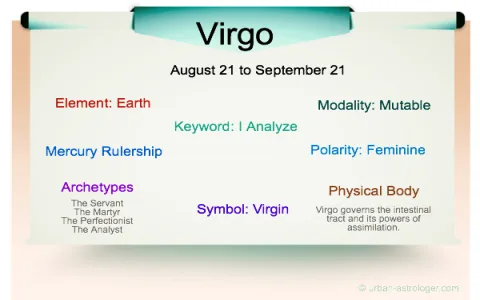
Man, so you want to know about Virgo girls, huh? I’ll tell you my story, how I actually figured them out, ’cause trust me, it wasn’t some textbook thing. I had to live through it. For years, I just thought they were all about being neat freaks or something, you know, the usual stuff you hear. Cleanliness, order, a bit critical maybe. That was my baseline, nothing deep.
Then I met this girl, back when I was hustling, trying to get my first real design gig off the ground. She was, let’s just say, a pivotal part of that whole period. We worked on a few projects together, not directly for the same company, but through a mutual client. Right from the start, I noticed things.
I would draft up a concept, feeling pretty good about it, all big picture stuff, you know? My style was always about the grand vision, the overall vibe. I’d send it over to her for feedback because she was like, the client’s go-to person for quality checks. And man, the notes I’d get back. It wasn’t just “this looks wrong.” It was like, “the kerning on this specific line is off by 0.2 points,” or “the shade of blue here clashes subtly with the background hex code you used in section three, paragraph two.”

At first, I was just annoyed, maybe a little defensive. Like, “who cares about 0.2 points?!” I’d push back, thinking she was just being difficult. I’d argue about the flow, the overall user experience, trying to steer the conversation back to the bigger picture. But she wouldn’t budge. She’d patiently, almost meticulously, explain why that tiny detail mattered. How it affected readability, how it created an imbalance, how it deviated from the brand guidelines we’d somehow overlooked.
I remember one time, we were prepping a presentation for a big meeting. I had everything laid out, thought it was perfect. She walked in, took one look, and immediately started adjusting things. Not just content, but the actual placement of logos, the spacing between bullet points, the way the images were cropped. I stood there, watching her move things by literal pixels, thinking, “Is she serious right now?”
I got pretty frustrated. I said something like, “Can’t we just get this done? It looks fine.”
And she just stopped, looked at me, and said, “It’s not just about looking ‘fine’. It’s about being right. If we present something that’s only ‘fine’, what does that say about our work? About our commitment?”
That really hit me. It wasn’t about being bossy or trying to prove she was smarter. It was about an almost inherent drive for perfection, for things to be just so. And not for the sake of it, but because she believed that attention to every single detail ultimately served a higher purpose: quality, clarity, and efficacy. It was about producing something truly excellent, something that genuinely worked for the client and the end-user.
I started observing her more closely after that. I noticed how she organized her own desk – not just neat, but logically arranged. Files meticulously labelled, not a single stray paper. Her workflow was like a perfectly oiled machine. When she committed to something, she didn’t just do it, she immersed herself in it, researching every angle, anticipating every potential problem.
My Revelations About Her “True Nature”
Through working with her, and frankly, learning to adapt to her way of operating, I started to really understand.
- It’s not criticism, it’s refinement. She wasn’t tearing down my work; she was trying to elevate it. She saw flaws that I, with my big-picture gaze, completely missed, and she genuinely wanted to fix them. It came from a place of wanting the best outcome, not from malice.
- The details really matter to her. For a Virgo girl, the small things aren’t small. They are the building blocks of the big picture. If the foundation of details is weak, the whole structure will eventually crumble.
- There’s a deep desire to serve. Everything she did, even the nitpicking, had an underlying purpose: to make things better, more efficient, more reliable for everyone involved. She was constantly analyzing, evaluating, and trying to improve systems, not for personal glory, but for functionality and benefit.
- Anxiety is often a driver. I slowly picked up that some of her need for control and perfection might stem from an internal anxiety about things going wrong. If everything is carefully planned and executed, there’s less room for error, and thus, less to worry about. It’s a coping mechanism as much as a trait.
So, yeah, it wasn’t some quick read in a magazine. I had to grind through projects, get my ego bruised a few times, and really listen to what she was saying, not just hear it. I learned to appreciate that meticulous eye, that unwavering dedication to precision. It changed how I approached my own work, making me slow down, double-check, and consider the ‘smaller’ elements that I once dismissed. It wasn’t easy, but man, it made my work, and frankly, me, a whole lot better in the end. It’s not just about what you see on the surface; it’s about digging in and understanding the ‘why’ behind it all.