
So, my journey into understanding Virgo babies, and eventually putting together this little guide for other parents, it all started with my own kid. Yeah, my firstborn. That little fella popped out and the hospital bracelet said “born on September something,” making him a solid Virgo. And let me tell ya, as a new parent, I thought I’d read all the books, knew all the stuff. Oh boy, was I wrong.
I remember those first few months. Everyone would say, “Oh, babies are just blobs, they eat, sleep, cry.” My kid? Not a blob. Not even close. From day one, he had this… particularity about him. If his bottle wasn’t just right, or his diaper felt even slightly off, or if the light was too bright, he’d let you know. Not just a cry, mind you. It was a cry that demanded precision. A cry that said, “Fix this specific thing, and fix it now, human.” It drove me nuts, honestly. All those glossy baby books talking about “calm, adaptable” newborns? That wasn’t my kid. He was intense, observant, and seemed to notice every little change in his environment.
I started scratching my head, wondering what was up. Was it just him? Was it me? My wife would joke, “He’s just particular, like you.” But it felt like more than just “particular.” It felt like a whole different operating system. I tried all the usual tricks, the swaddling, the shushing, the rocking. Sometimes they worked, sometimes they just made things worse because, apparently, I wasn’t doing them precisely enough.

That’s when I kind of stumbled into the whole zodiac thing. Not because I’m some big astrology guru, far from it. But someone, an older friend who had like, five kids, she mentioned, “Oh, he’s a Virgo? Yeah, they’re like that. Very specific, neat freaks even as babies.” And I just thought, “Huh.” It was the first time I heard someone connect my kid’s quirks to something beyond just him being “him.”
My Deep Dive into Little Virgos
So, I started digging. Not into prophecies or anything, but just into the common personality traits associated with Virgos, particularly kids. My process was pretty simple, really, a mix of observing, reading, and just chatting people up.
- First, I watched my own son. I mean, really watched him. How he reacted to different sounds, textures, routines. I started noticing patterns. He hated surprises. He loved it when things were in their “place.” If his toys got all jumbled up, he’d sometimes just stare at them with this look of mild distress. He’d meticulously pick up tiny crumbs from the high chair tray. At six months old!
- Then, I hit the internet and the library. I wasn’t looking for “future predictions,” just descriptions of personalities. I read countless articles, blog posts (the good ones, not the airy-fairy stuff), and even some actual books about the zodiac signs and children. I ignored all the stuff about destiny and focused solely on behavioral patterns.
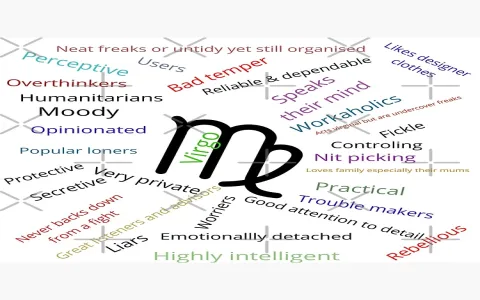
- I talked to other parents. This was a big one. At playgroups, at family gatherings, whenever I met someone whose kid had a birthday around August-September, I’d bring it up. “So, is your little one really into routine?” or “Do they notice every little thing?” And the stories started pouring in. Parents describing their Virgo kids as “neat freaks,” “obsessed with detail,” “picky eaters,” “very organized.” It was like I had found my tribe, or rather, my kid’s tribe.
- I kept notes. Just a simple notepad on my phone. When I observed something new in my son, or heard a similar story from another parent, I’d jot it down. Things like “fussed when blanket wasn’t flat,” “spent 10 minutes lining up blocks,” “got upset when schedule changed abruptly.”
Slowly but surely, a picture started to form. It wasn’t just some vague astrological mumbo-jumbo anymore. It was a set of observable, predictable traits. It was a pattern, a blueprint for understanding these little humans.
Putting the “Quick Guide” Together
From all that watching and reading and talking, I started piecing together what I now call my “Quick Guide.” It wasn’t rocket science, just common sense observations. I realized that a lot of the things that used to frustrate me were actually just core parts of his personality. Things like:
- Their love for routine: They thrive on predictability. Changing things up suddenly can throw them completely off. I learned to give him warnings, even as a toddler. “In five minutes, we’re going to put away the blocks.”
- Their keen eye for detail: They notice everything. A tiny stain on their shirt, a misplaced toy. What I saw as nitpicking, they saw as just… how things were supposed to be. I learned to appreciate his observational skills rather than get annoyed by them.
- Their need for order: They often prefer things to be tidy and organized. Give them a chance to help “sort” or “arrange” their toys, and they’ll often jump at it. It’s not about being a clean freak, it’s about making sense of their world.
- Their sensitivity: They can be easily overwhelmed by chaos or loud environments. They often need quiet time to process and recharge.
- Their helpful nature: Many Virgos, even small ones, like to feel useful. Giving them simple tasks (“Can you hand me that?”) can make them feel valued and engaged.
Realizing these things, it was like a lightbulb went off. It didn’t magically make parenting easy, but it gave me a framework. It allowed me to anticipate his reactions, to understand why he was reacting a certain way, and to adjust my approach. Instead of fighting against his nature, I started working with it. It made our lives so much smoother, honestly. And that’s why I decided to put it all down, in simple terms, for other parents who might be scratching their heads over their own little Virgos.