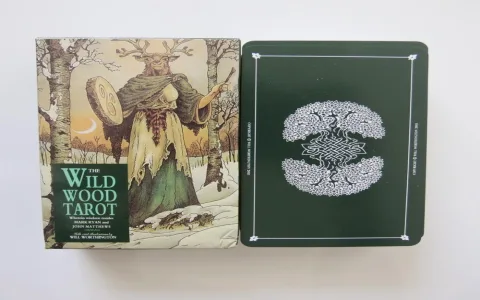


Man, so, how I got into this whole tarot thing? It’s kind of a long story, but I’ll make it quick for you. I was just scrolling online one day, you know, just aimlessly browsing, and I kept seeing these cool-looking tarot decks pop up. Never really thought much about them before, just figured it was some fortune-telling mumbo jumbo. But the art on some of these decks, especially the classic Rider Waite one, just grabbed me. There was something about those old-school images, all full of symbols, that just made me curious. It wasn’t about predicting the future for me; it was more like, “What’s the deal with all this imagery?”
So, curiosity got the better of me. I decided I wanted to actually learn what these cards were all about. I didn’t want to just buy a deck and stare at it like an idiot. I needed a starting point. And that’s where the internet, as always, came to the rescue. I started poking around, looking for resources. I saw a lot of folks talking about the Rider Waite deck being the go-to for beginners, mostly because so many resources are built around it. And then, bam! I stumbled upon the Rider Waite Tarot Guidebook PDF. It wasn’t fancy, just a plain old digital file, but it had all the original descriptions, the ones that came with the actual deck way back when. I figured, if I’m gonna learn, I might as well go straight to the source, right?
First few weeks were a mess, let me tell ya. I downloaded that PDF, opened it up, and just started scrolling. It was a ton of text. Each card had its upright meaning, its reversed meaning, a bunch of symbolism, astrological connections – my head was spinning. I tried to just read it straight through, like it was a novel, but that was a mistake. Nothing stuck. I was just glazing over the words. I’d read about The Fool, then The Magician, then The High Priestess, and by the time I got to The Empress, I couldn’t remember what The Fool even meant anymore. It was like trying to drink from a fire hose.
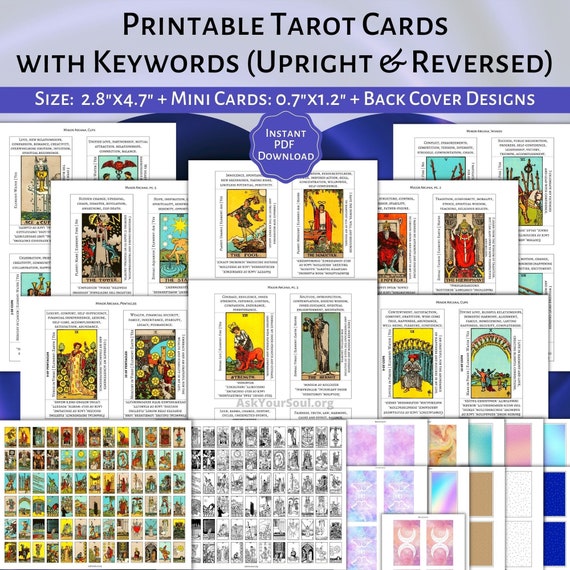
I realized I needed a different approach. So, I grabbed an actual physical Rider Waite deck – yeah, had to get one after all, felt more legit than just looking at pictures on a screen. Then I started to tackle the PDF one card at a time. This is how I broke it down:
- Picking one card a day: I’d shuffle the deck, pull one card, and that was “my card” for the day.
- Deep dive into the PDF: I’d go straight to that card’s section in the PDF. I wouldn’t just read it; I’d really try to picture the card, look at all the little details on the image.
- Writing it down: This was key. I started a little notebook. For each card, I’d jot down the main keywords from the PDF for both upright and reversed meanings. Not full sentences, just bullet points, stuff I could actually remember.
- Connecting it to life: This was the fun part. After reading and writing, I’d think about my day, or something I was going through, and try to see how that card’s meaning might, just might, relate. No pressure, just a mental exercise.
Doing it this way, slow and steady, things started clicking. I wasn’t trying to memorize everything word for word, but I was building a kind of internal dictionary. The images on the cards started to “speak” to me more. Like, when I saw the Chariot, I didn’t just remember “victory and willpower” from the PDF; I saw the guy driving that thing, kinda tense, but moving forward. It felt more alive.
Moving Beyond the Basics with the Guidebook
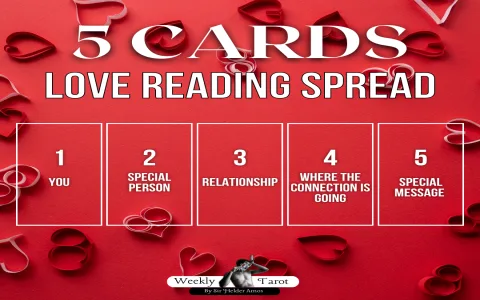
After a few weeks of doing one card a day, I started feeling a little more confident. I still used that PDF, mind you, like a security blanket. But now, instead of just individual cards, I wanted to see how they worked together. The PDF actually has a little section on basic spreads. Nothing too crazy, just a three-card spread: past, present, future. Or situation, action, outcome.
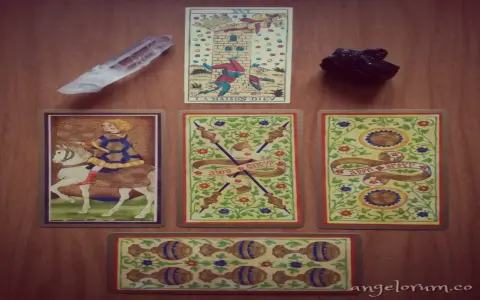
So, I started pulling three cards. And here’s where it got interesting and also a bit frustrating. Sometimes, the cards would make perfect sense together, almost like they were telling a clear story that matched my thoughts. Other times, it was total gibberish. I’d read the meanings from the PDF for each card, and they’d feel disjointed, like three random sentences that didn’t belong in the same paragraph.
This is where the real learning happened, though. I realized the PDF wasn’t just giving me definitive answers; it was giving me a framework. It was giving me ideas. My job wasn’t just to parrot what the book said, but to weave those ideas into a narrative. I started asking myself questions like, “How does this card, meaning X, influence this other card, meaning Y?” Or “If this is the challenge, what does this outcome card suggest I should do?”
I found myself going back to the PDF, rereading sections, but with a new perspective. Instead of just trying to “get” the meaning, I was trying to “interpret” it. It was like learning a new language, then starting to write poetry in it. A bit clunky at first, full of mistakes, but slowly, slowly, I started to find my voice.
That PDF, man, it’s still on my desktop. I don’t pore over it every single day anymore like I used to. But it’s always there, a solid reference. If I pull a card and feel totally stumped, or if I want to just refresh my memory on some of the deeper symbols, I still crack it open. It taught me the alphabet, the grammar. Now, I feel like I can read the stories the cards are trying to tell me, and sometimes, even write my own with them. It’s been a cool journey, honestly, much more than just a dusty old book file.