

Man, dealing with teenagers, right? It’s like trying to understand an alien language sometimes. Especially when they hit that age where they’re not kids anymore, but not quite adults either. I remember when my niece, Sarah, started morphing into that phase. She was always a pretty calm kid, but around thirteen, everything just… tightened up. She wasn’t throwing tantrums or being disrespectful, not like some kids you hear about. It was more subtle, almost like she had a secret rulebook for life that only she knew, and everyone else was just constantly breaking her unwritten rules.
I’d try to be the cool aunt, you know? Suggest we bake cookies, make a mess, do something spontaneous. And she’d look at me with these really serious eyes and say, “Auntie, shouldn’t we check the recipe first for exact measurements?” or “Is this really the most efficient way to preheat the oven?” I swear, she could make a fun activity feel like a science experiment where any deviation from the precise protocol would lead to utter disaster. Or if we went out for an ice cream, she’d meticulously check the napkins to make sure they were spotless before touching them, and then scrutinize her cone for any drips even before taking a lick. My own kids were never like that, they just dove in. So, I kept thinking, what on earth is going on with this girl?
For a while, I just kinda brushed it off. “Oh, that’s just Sarah,” her mom, my sister, would say, a little exasperated herself. But it bugged me. I hated feeling like I couldn’t connect with her, like there was this wall of precise, analytical logic between us. I’d try to crack jokes, lighten the mood, but she’d just offer a polite, small smile, or, even worse, logically pick apart my joke. My wife, bless her heart, she tried too. She’d suggest things, “Maybe she’s just shy,” or “Give her time.” But it felt like more than shyness. It felt like a fundamental difference in how she processed the world around her, a constant quest for order and correctness.
The whole thing was actually making me feel a bit useless as an aunt. I wanted to be that fun, approachable figure, someone she could talk to. But every conversation felt like I was walking on eggshells, trying not to mess up her precise mental landscape. I started observing her more closely when she was around. How she’d arrange her school supplies with military precision, how she’d organize her closet not just by color but by fabric and season. If anyone left a coffee cup just slightly off-center on the table, I’d see her practically twitch before she’d subtly, almost imperceptibly, nudge it back into perfect alignment. It was wild to watch.
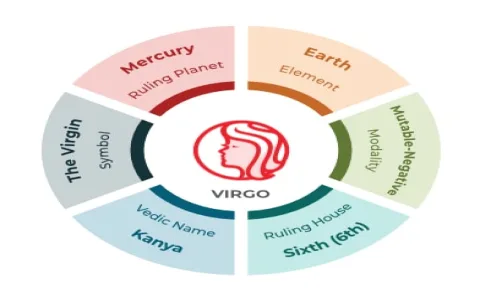
It really started getting to me. One evening, after a particularly ‘structured’ family dinner where Sarah had, without being asked, sorted all the silverware for the dishwasher and then wiped down the counters even before her mom got to them, I just blurted out to my sister, “What sign is Sarah?” I don’t know why I asked it. I wasn’t some astrology guru, not by a long shot. But I was just grasping for any framework, any angle that might offer a shred of understanding into this meticulous little human. My sister told me, “She’s a Virgo, born right at the end of August.”
Now, I’d heard bits and pieces about star signs, mostly just funny memes or vague descriptions. But something about that word, “Virgo,” just kinda stuck in my head. I wasn’t going to go deep diving into ancient texts or anything, but later that night, just out of pure curiosity, I started doing some casual reading. Nothing serious, just scrolled through some blog posts and forums, the kind of stuff you find when you’re just looking for surface-level info. And man, it was like reading Sarah’s psychological profile. It was uncanny.
Everywhere I looked, the descriptions just perfectly mirrored her:
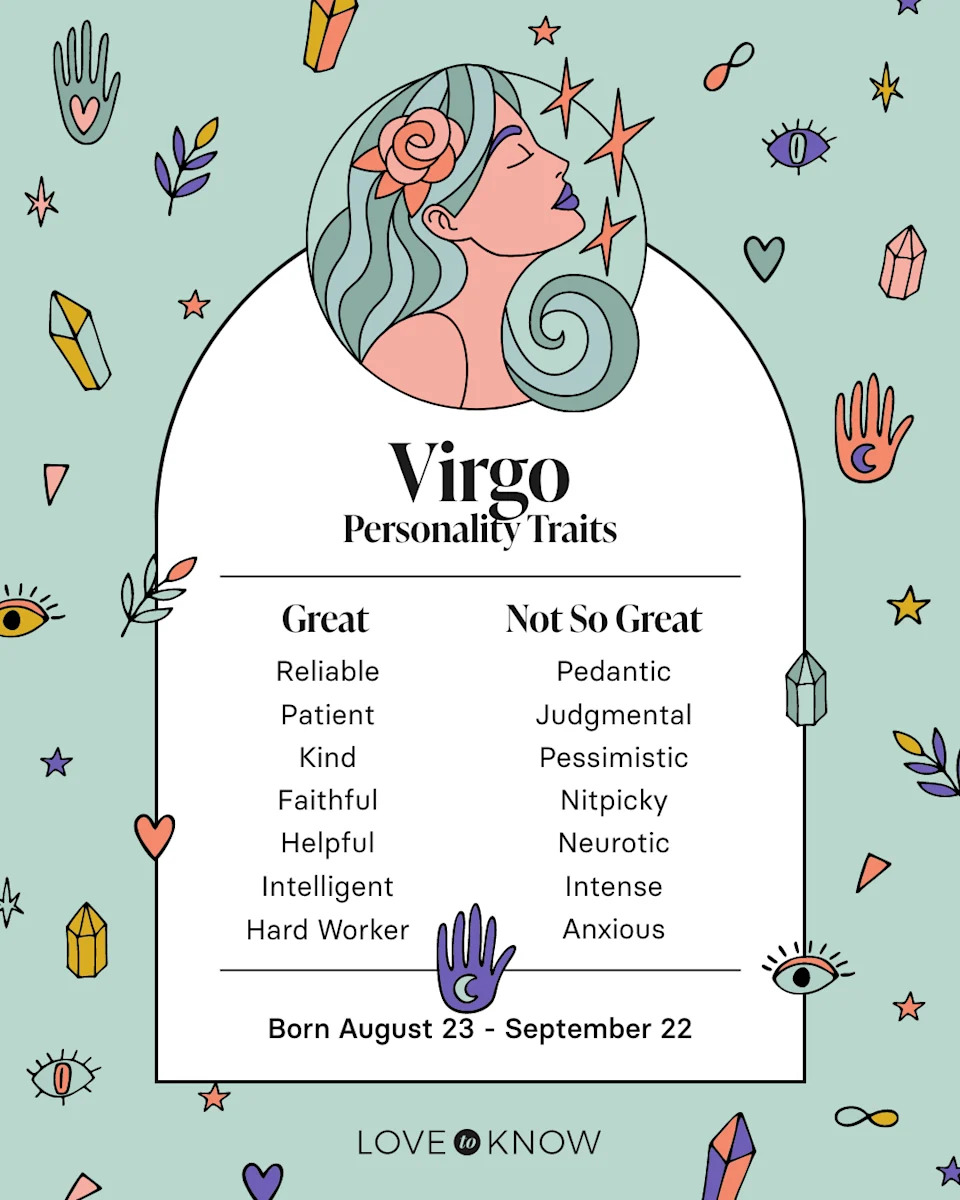
- The need for order and perfection: My God, that was Sarah to a T. Her insistence on things being “just so,” her meticulous habits, her desire for everything to be clean and organized. That wasn’t just her being particular; it was a fundamental drive. It made sense why a messy art project was probably more agony than joy for her.
- Analytical and detail-oriented: Her sharp observations, her ability to spot the tiniest inconsistency, her tendency to break things down logically instead of emotionally. That’s why my jokes probably fell flat. She wasn’t just hearing a funny story; she was analyzing the setup, the punchline, and probably finding flaws in its structure.
- Practical and helpful: The way she’d proactively clean things, offer solutions instead of just complaining, her quiet acts of service. She wasn’t looking for praise; she was just being helpful in a tangible, practical way. It clicked that her way of showing care wasn’t always through big hugs or gushy words, but through doing things that made life run smoother.
- Reserved and a bit critical: Her quiet nature, her tendency to observe before speaking, and yes, her occasional mild criticisms. It wasn’t about being mean-spirited; it was about a deeply ingrained desire for improvement and efficiency. She saw things that could be better, and sometimes she just couldn’t help but point them out.
It wasn’t like a magic spell suddenly made us best friends, but that simple “Virgo” label, and the traits associated with it, completely shifted my perspective. Instead of seeing her particularities as difficulties, I started seeing them as core parts of who she was. Instead of getting frustrated when she’d correct my haphazard way of folding laundry, I’d just hand her the clothes and let her do it her way. And you know what? She seemed genuinely pleased to just… do it. I started asking her for her logical input on things, like, “Hey Sarah, I’m trying to figure out the best way to organize these kitchen cabinets. What do you think would be the most efficient layout?” Her face would light up. She loved being asked for her practical wisdom.
It sounds so simple, right? Just understanding a few basic tendencies. But it truly changed how I approached her. I stopped trying to force her into being someone she wasn’t. I appreciated her quiet strength, her reliability, her inherent drive to make things orderly and functional. It was less about making her conform to my idea of a “fun teen” and more about acknowledging and valuing her for her unique traits. We started having smoother interactions. She felt seen, and I felt like I finally had a compass for navigating her world. Still a teenager, still has her moments, but now I’ve got a much better grasp on the incredible, meticulous young woman she’s becoming.