
The Virgo Grind: My Unsolicited, Stressful Field Study
I’m gonna level with you guys. The title isn’t clickbait. It’s a journal entry for surviving what felt like an audit of my entire life, disguised as a relationship. I met this dude, let’s call him ‘M’, last summer. Everything was fine, all sunshine and easy smiles for the first few months. Then the Mercury Retrograde hit, or maybe just reality, and suddenly, every single thing I did—from loading the dishwasher to choosing a restaurant—was under a microscope. I was losing it. I went from feeling loved to feeling like a perpetual hot mess who needed constant, detailed improvement. My confidence was shot, and I needed an external reason, a manual, to understand why he couldn’t just chill.
The turning point? It was over a chipped coffee mug. Seriously. I bought a set of mugs from a vintage market. M found a microscopic flaw on the rim of one. He didn’t yell, he didn’t throw it, he just pointed to it, calmly, and asked, “Are you sure this is acceptable quality, considering the price you paid?” That tiny sentence, that focused critique on something completely irrelevant, broke me. I realized I wasn’t dealing with typical relationship drama; I was dealing with a system.
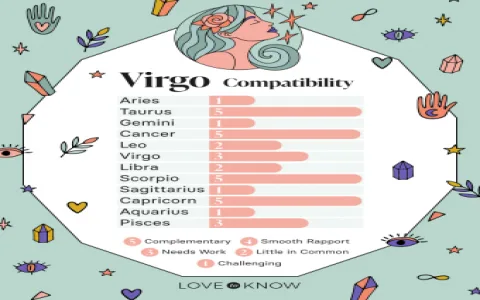
So, I hit the web and I didn’t look for advice on communication or feelings. I went straight for the charts. I Googled the hell out of “Virgo man love habits” because I needed the playbook. I needed to know what machine I was trying to operate. I dumped all the flowery, spiritual crap. I boiled it down to three observable, testable habits I needed to master or fake:

- The Pursuit of Practical Service. Forget romance. They want help with their taxes or a perfectly organized toolbox.
- The Fear of Mess. Not just cleanliness, but organized cleanliness. A predictable environment is their comfort zone.
- The Need to Critique. It’s not about you being wrong; it’s about their need to process and refine the world around them, and you’re part of that world.
My practice started immediately. I had to ditch my old habits. I went from a spontaneous, ‘let’s order pizza’ type to a meticulous planner. I didn’t ask if he needed help; I just did something practical and necessary.
My first practical implementation was his apartment closet. That thing was chaos. I didn’t mention the Virgo research or the plan. I just showed up with a labeling machine and a box of matching hangers. I spent five hours organizing his shirts by color, sleeve length, and wear frequency. I categorized his socks into “work,” “gym,” and “I forgot I owned these.” I didn’t wait for a thanks. I just finished, said, “Tidied up the clothes,” and waited.
He didn’t freak out. He walked in, stood there for a full minute, and then he just smiled—a real, genuine, relaxed smile, the kind I hadn’t seen in months. He didn’t say “I love you.” He said, “I was going to do that next Thursday, but this saves me about three hours of mental planning. Thank you.” That was my first win. It was a utilitarian expression of love, and it was loud and clear.
The second test was harder: handling the criticism. I’m a fighter; I defend my choices. But the charts told me to just absorb the data. One night, I cooked dinner, a recipe I was proud of. He took a bite and said, “The paprika is slightly unevenly distributed. Did you measure the liquid before reducing it?” Usually, I’d fire back with, “Eat your own food, M!” This time, I took a deep breath, and I just said, “Noted. I’ll use a finer sieve next time.”
The immediate result was amazing: he looked surprised, then actually started talking about something else. The fight cycle, the exhausting back-and-forth where I defended my paprika choices, just shut down. By accepting the tiny critique, I took away its power, and he relaxed because his need for perfection was acknowledged, not fought.
I kept this up for a month. I wasn’t just dating M; I was running a controlled experiment on his personality traits, using the horoscope guides as my methodology. I replaced random gifts with subscriptions to professional journals or cleaning services. I started showing up five minutes early for everything, just to deny him the opportunity to point out my lateness. I became the hyper-organized, practical partner I thought he wanted.
What I achieved wasn’t a relationship “win,” it was better. I realized I hadn’t changed him; I hadn’t even truly changed myself. I just learned to speak the language of “practical acknowledgement.” It wasn’t about hiding my flaws; it was about demonstrating that I respected his mental need for order enough to give him some. It made the relationship easy again, not because I was perfect, but because I stopped fighting his internal filter. The tips from the stars weren’t a trick to win his heart; they were a translation guide to his very particular brain. And once I finally stopped taking his need for order personally, we could finally just enjoy the damn coffee, even if the mug was chipped.