


I’ve been doing these quick pulls for almost a year now, just simple stuff, you know? Like, “Should I take that meeting?” or “Is that new client going to finally pay up this week?” Most of the Major Arcana are pretty chill for a quick Yes/No. The Lovers is usually a big fat Yes, The Tower is a hard No, Strength is a solid “Yes, but you gotta lean into it.”
The Judgement Mess That Started It All
But Judgement. Man, Judgement kept throwing me for a loop. It was the only card that felt like it had schizophrenia every time it landed face up. One morning, I pulled it asking about going ahead with this big software update, and it felt like a definite, clear “Yes, you have to move forward, the time is now, stop stalling.” The next night, I pulled it asking about signing off on some simple contract, and the energy was totally different—it felt like a massive “Hold up, stop everything, you haven’t reviewed the real small print, go back and look at your options again.” A huge, cautionary No.
I was getting seriously pissed off. I had a spread sheet that worked for every other damn card, except this one. I talked to a few guys online, and they all just said, “Well, it’s Judgement, it’s complicated,” which is total crap advice. If it’s complicated, then the interpretation has to shift based on the question, right? But I couldn’t prove it. Everything in the books pegs it as a fixed meaning: awakening, resurrection, evaluation. That doesn’t help me decide if I should buy a new pair of sneakers.
So, I decided to run a proper experiment. Not some hippie, feeling-based garbage. I decided to track this thing like I track my server loads.
The 30-Day Protocol and Data Grind
I set up a fresh new sheet. I committed to pulling Judgement for ten completely different, very simple, and very trackable Yes/No questions every single day for thirty days straight. That’s 300 data points. But the important part was how I recorded it.
The Data Points I Logged:
- Date and Time (down to the minute, because I’m that guy).
- The Question (e.g., “Will the supplier email me back today?”, “Is the old project manager going to retire this month?”).
- My Initial Gut Feeling (Before checking the outcome: Y/N/Unsure).
- The Lived Outcome (The verifiable truth: Yes/No).
- A Context Note (Was the question about a major life choice or something totally trivial?).
The first week was pure hell. I was trying too hard to jam the card into a predefined box. When the card came up for a simple question like, “Will traffic be bad on the way home?”, and it felt heavy, I wrote “No,” because I was overthinking the ‘evaluation’ part. Traffic was fine. My initial ‘heavy’ reading was wrong.
I realized I was approaching it completely wrong. Judgement wasn’t giving a fixed answer; it was giving a fixed tone that meant something different depending on the scale of the question. You can’t use a hammer to drive a screw.
Stopping the Reading, Starting the Listening
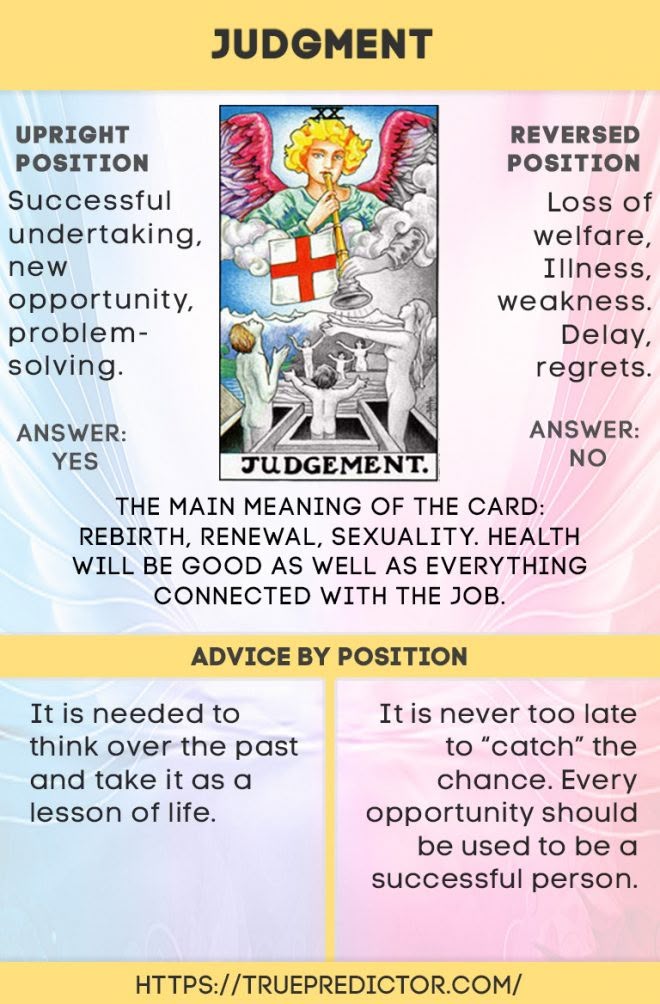
I scrapped the first ten days of data—it was corrupted by my own bias. I started over, but this time, I decided to stop reading the damn books entirely. I just focused on the image on the Rider-Waite card: the trumpet, the people rising out of their coffins, the big blue sky. Resurrection, sure, but look at those faces. They’re surprised, maybe a little afraid, but mostly resolved.
This is what I started seeing in the data:
When the question was BIG—like resigning from my job, or whether to move across the country—Judgement was a resounding, often scary, but ultimately positive Yes. It meant, “You are being called; the time for passive stalling is over, you have to say yes to the big change.” It was freedom, not just a decision.
But when the question was SMALL—like asking if I should immediately jump into a small, rushed investment, or if I should skip my daily workout just this once—Judgement was almost always a clear-cut No, but an angry one. It meant, “Stop trying to cut corners! You are being tested on a tiny thing, and if you cheat here, it will bite you later.” It was a warning against self-deception in the small stuff.
The Yes/No interpretation absolutely changed, but not randomly. It changed based on the stakes. It wasn’t a simple binary function; it was a complex conditional statement. The card wasn’t changing its meaning; it was changing its application based on the input of the question. For a big question, the rebirth is needed. For a small, lazy question, the re-evaluation (and thus the No) is needed.
That clarity alone made the whole ridiculous 30-day tracking process worthwhile. Now, when I pull Judgement, I don’t look up the meaning in a book; I look at my logs and match the energy to the scale of the decision. It finally, finally makes sense.