
The whole thing started because I was completely stuck. I mean, totally frozen. Every job board looked the same, every interview felt like a replay, and every piece of ‘career advice’ I read online was just generic rubbish. I had to make a big decision about a contract extension, and my head just couldn’t sort it out.
I tried all those free online tarot readings, you know the ones. Click a button, and you get some generated junk like, “A new opportunity is on the horizon, but be careful of old habits.” What the heck does that even mean for my real-life job? Nothing. It was a joke, frankly. That’s when I decided I had to make my own damn advice tool that actually said something useful.
I didn’t want to build a whole complicated platform or anything, just something fast that forced me to look at things differently. My goal wasn’t psychic revelation; it was just simple, blunt career advice disguised as mysticism.

The Setup: Getting the Bones Right
First thing I did was just grab a cheap domain name. Something ridiculous I wouldn’t worry about. I skipped setting up a proper database. That’s too much messing around. My practice was all about speed. I knew I could just dump everything into a couple of big, ugly JSON files and load them up with simple JavaScript.
The real work was getting the card meanings. I opened up three different old PDF books on tarot—I didn’t buy them, just found some dusty copies online—and I spent a whole afternoon copying and pasting the raw text into a giant spreadsheet. It was a massive mess. Hundreds of lines of flowery language about love and destiny.
I had to manually go through every single line, looking only for the career-related concepts. If it mentioned promotion, strategy, partners, or delays, I kept it. If it was about passion or finding a soulmate, I tossed it right in the bin. I ended up with a core set of just one or two punchy sentences for each of the 78 cards. This filtering process was the most brutal part of the whole practice. It took me a full weekend just to clean up the data.
The Algorithm: Making it Spit Advice
When it came to the actual ‘reading,’ I kept it caveman simple. I decided on the classic three-card spread:
- The Situation (What’s happening now)
- The Roadblock (What’s screwing you up)
- The Simple Advice (What you gotta do next)
I wrote a tiny bit of code. It just generates three random numbers between 1 and 78. No fancy shuffles, no ‘card reversal’ complications. It just grabs the card data that matches those numbers and slams the text onto the screen. Done. I didn’t bother with any animations or nice fonts. It had to look homemade, like something I scribbled on a napkin.
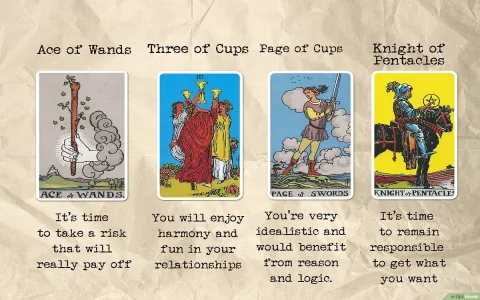
The most important part was the ‘Simple Advice’ slot. I realized the standard tarot meanings were still too vague for the third card. So, I took the 22 Major Arcana cards, the big powerful ones, and I sat down and personally wrote 22 pieces of utterly non-negotiable, real-world instruction.
For example:
- The Tower (Usually bad news): The advice I wrote was, “You have been fired. Do not negotiate. Take the severance and walk away now.”
- The Empress (Usually nurturing/growth): The advice I wrote was, “Stop planning. Hire the junior assistant now. Delegate before you drown in paperwork.”
They weren’t gentle. They were exactly the sort of kick in the pants I needed when I was stuck in that career mess.
The Launch: Just Tossing It Up There
I packaged the whole thing up—the HTML, the CSS that barely worked, and the two JSON files—and just FTP-ed the whole mess up to the cheapest hosting provider I could find. It took about five minutes. I didn’t track users. I didn’t set up analytics. I didn’t even tell anyone about it at first. It was my secret little tool.
I only started using it myself. When I was agonizing over that contract, I’d pull my cards. One time, I got a combination that basically screamed, “The current job is a lie, and you need to go back to school to pivot your skills.” It was exactly what I’d been avoiding thinking about. I typed up my resignation the next morning and signed up for an online certificate course that same week.
Since then, I’ve shared the link with a few friends who were also floundering. They all came back saying the same thing: the advice was often completely wrong, but it was so specific and direct that it forced them to either follow it or immediately find a better, specific reason not to follow it. That’s the power of the practice. It’s not about predicting the future. It’s about building a blunt instrument to break your own mental gridlock.
I still check my reading maybe once a month. I never made any money off it, but the thing I built to escape a career crisis actually ended up guiding me right out of the damn thing. That cheap, ugly site is the purest record of my career reboot