
So, you’re wondering about a Tarot course, huh? “Is it really worth it?” That was the big question buzzing in my head for ages. For the longest time, I just messed around with a deck I’d picked up, trying to figure things out from a little book that came with it. Honestly, it was a mess. I’d pull cards, read a vague description, and just scratch my head. It felt like I was trying to learn a language by only knowing a handful of words. I wanted to actually understand what was going on, not just memorize a bunch of keywords.
I saw all these folks online, doing these amazing readings, talking about spreads and intuition like it was second nature. Me? I was still fumbling with the Magician versus the High Priestess, wondering if I even shuffled right. The whole thing felt overwhelming, like climbing a mountain without a map. Every time I tried to sit down and really focus, I’d get bogged down in conflicting interpretations or just feel like I was making it all up. My readings were always super generic, the kind of stuff that could apply to anyone on any given Tuesday. I wanted more depth, more actual insight.
That’s when I finally caved. I started looking at actual courses. Not just free YouTube videos, but something structured. I wasn’t looking for some fancy certification or to become a pro psychic, just wanted to get a handle on the damn cards. I scoured a few sites, read a bunch of reviews – mostly looking for folks who sounded like me, total newbies who managed to actually ‘get it’. I didn’t want anything too mystical or airy-fairy. Just practical stuff. I figured, what’s the worst that could happen? I’d waste a few bucks, but at least I’d know I tried a proper route.

I ended up picking one that promised to “master the basics easily.” Sounded exactly like what I needed. It wasn’t super expensive, which was a plus. I signed up, got my login, and felt a tiny buzz of excitement mixed with a whole lot of skepticism. Like, really, could I actually learn this? The course itself was mostly videos and downloadable worksheets. The instructor was chill, not too intense, which was a relief. She started right from square one: understanding the deck structure.
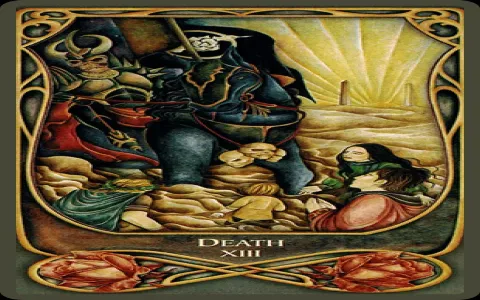
First, we went through the Major Arcana. Each card, one by one. She didn’t just give keywords; she talked about the stories, the symbols, what they represented in life’s journey. This was a game changer. Instead of “Magician = manifestation,” it became “The Magician is about taking your raw potential and actively shaping it into something real, using your will and available tools.” That made so much more sense! I started seeing the connections, the flow from The Fool’s journey. I spent a whole week just on the Majors, drawing one a day and journaling about it, trying to see how its theme might pop up in my own life.
Then we dove into the Minor Arcana. This felt a bit more like a grind, remembering all the suits and numbers. But again, she broke it down. Wands for passion and action, Cups for emotions, Swords for intellect and challenges, Pentacles for material world and security. It wasn’t just “Ace of Wands = new beginnings.” It was “Ace of Wands = a spark of new creative energy, an opportunity for action in your spiritual or career path.” Suddenly, the numbers made sense too – Aces as beginnings, Twos as balance/choice, Threes as growth, and so on. I started to see patterns across the suits. Like the “fours” always felt about stability or stagnation, no matter the suit. This was the first time I felt like things were actually clicking into place.
The course had us practice with simple spreads early on. A three-card spread for past, present, future; a simple “situation, action, outcome” spread. This was crucial. Before, I was just pulling random cards. Now, each position had a specific question, and that really helped narrow down the interpretation. I started to trust my gut a bit more. If the 8 of Swords came up in the “challenge” position, it just felt right, a feeling of being stuck in my own head. I wasn’t just guessing anymore, I was connecting the card’s meaning to the spread’s context.
There were definitely moments of frustration. Sometimes I’d draw a card, and my brain would just go blank. Or I’d get two cards that seemed to completely contradict each other, and I’d think, “See? I’m no good at this.” But the course always emphasized journaling and reflecting, not just looking up answers. The idea was to sit with the card, look at the images, and see what I felt first, before running to the book. That helped a lot in building my own intuition and not just relying on rote memorization.
By the end of it, maybe six or eight weeks later, I felt way more confident. I could pick up my deck and actually do a decent reading for myself, or even for a friend without feeling like a complete fraud. I wasn’t an expert, not by a long shot, but I had a solid foundation. I understood the language of the cards, could piece together a narrative, and felt connected to the deck in a way I never did before. So, yeah, for me, that Tarot course was absolutely worth it. It transformed a confusing jumble of images into a meaningful tool I could actually use.