
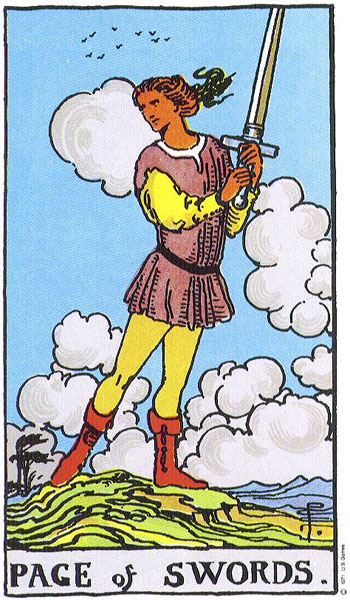
Should you be worried about the Page of Swords? That’s what they ask. Every damn time.
My answer has changed over the years, I gotta tell you. When I first started slinging cards, I thought it was just the standard mess—gossip, immature action, big talk with no follow-through. It’s not just the Page of Swords, though. You shouldn’t be worried about any one card on its own; you should be worried about the whole damn attitude we bring to the table when we read.
I’ve seen clients pull the Page of Swords and immediately assume their ex is running around badmouthing them. The whole reading gets derailed on that one idea. They ignore the surrounding spread, which might be a total mess of:
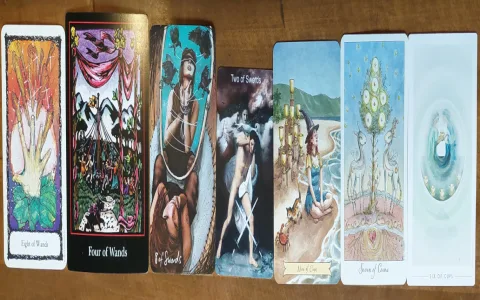
- The Four of Wands (A solid foundation, actually).
- The Five of Pentacles (Feeling left out, the real emotional core).
- The Knight of Cups (A sweet, but lazy, offer coming soon).
- And maybe a big ol’ Hanged Man (The situation is simply stuck, nothing is moving!).
See? The Page of Swords is just one voice in that choir. But because it has that “Sword” energy—that sharpness, that potential for conflict or intellectual worry—they lock onto it like a laser beam. The real problem isn’t the card; it’s the lack of proper technique, both for the reader and the person getting the reading, which turns it into a self-fulfilling prophecy of fear.
I used to do this myself. I was taught the hard, traditional way. Swords equals pain, Page equals youth/immaturity, so Page of Swords equals painful, immature communication, full stop. I was missing the most important thing: it’s active, mental energy. It’s the desire to know and to speak the truth, no matter how clumsy it comes out. That’s why you shouldn’t worry—because the worry itself is Page of Swords energy!
The Time I Learned the Hard Way
Why do I know this? Why am I so dead set on saying stop worrying about this particular card? Because it totally screwed up a love situation I had going on about two years ago. I was dating this guy. Things were getting serious. We had planned a trip, talked about moving closer, the whole shebang.
Then, bam. Silence. Not a complete ghosting, but his texts went from every hour to every two days, and they were short, clipped, and totally vague. I went nuts. I mean, totally went nuts.
I pulled my personal spread on the situation. What did I get? You guessed it. Page of Swords. Right in the center. I pulled it three times in two days, trying to figure out if I was reading it wrong. I was convinced he was talking smack about me to his friends, or that he was secretly seeing someone else and the card was a warning about “lies” and “sharp words.”
I stopped sleeping. I started doing exactly what the Page of Swords sometimes stands for: I got sharp, defensive, and I started spying on his online stuff. I checked his last online time. I checked his old posts. I became the immature, over-analyzing energy of the card.
I spent an entire week in a total spiral of anxiety, projecting all my worst fears onto the poor guy. I finally couldn’t take it anymore and I sent him a really long, incredibly sharp, intellectual-sounding text—the purest form of the Page of Swords you could imagine—demanding answers and laying out my whole over-analyzed case.
The Real Answer That Made Me Sit Down
He called me five minutes later. The whole story that came out was ridiculously simple, completely boring, and had nothing to do with gossip or lies. His father had a sudden, emergency health scare, and he had flown across the country to deal with it, completely swamped with hospital details, family, and exhaustion. He wasn’t talking to anyone properly. He said he was so tired he could barely string two words together, and he didn’t want to bring me into the drama until he knew what was going on. He just clammed up and focused on the problem.
I felt like an idiot. I had wasted a whole week of emotional energy becoming the thing I feared—the sharp, immature, overly-worried thinker.
The lesson I learned? The Page of Swords in a love reading is rarely about external malice. It’s almost always a mirror. It’s asking you: Are you over-analyzing? Are you starting arguments that aren’t necessary? Are you trying to cut through the confusion with a sharp mind when you should be cutting through it with soft heart? It’s not a disaster card; it’s a warning about where your headspace is at.
After that, I made a commitment to completely change how I interpreted that damn suit. I stopped letting people fixate on the fear part and forced them to look at the surrounding cards—where the actual emotional blockage (The 5 of Pentacles) or the stuck energy (The Hanged Man) was lurking. The Page wasn’t the problem; it was the noisy, distracting siren going off while the actual fire was burning down the house.
You shouldn’t be worried about this card. You should be worried that you’re letting your mind run the show instead of your heart. That’s my takeaway, and that’s the practice I stick to now, even though those old-school readers still charge big money selling fear and gossip.
Trust me, save your energy. Stop worrying. Start thinking smarter, not harder.