


I’ve always been fascinated by horoscopes, but honestly, trying to really grasp the core of any sign feels like trying to catch smoke. Especially Virgo. Everyone talks about Virgos being neat freaks and overly critical, but that’s just the surface stuff, right?
The Dive into Virgo’s Mindset
I started this little project because my best friend is a Virgo, and sometimes I swear she lives on a completely different planet. She’s super helpful but then BAM! She critiques my entire life choices, even my choice of coffee mug. I needed to figure out the engine driving this behavior.
I didn’t just read those silly online lists. I went deep. I tracked down old astrology books—the ones with diagrams and serious planetary alignment explanations. I wanted the roots, not the flimsy modern interpretations.
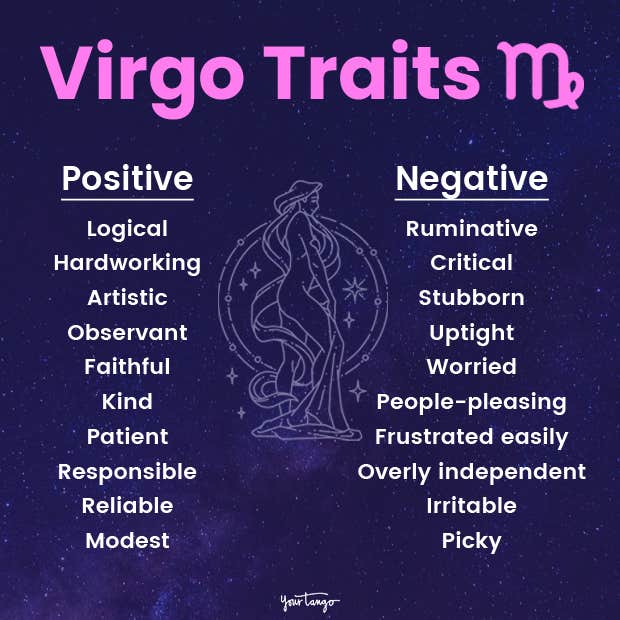
First step: Observing the Positive.
I kept a physical notebook—yes, old school—and for two weeks, I logged every good thing my friend or other known Virgos in my life did. What popped out immediately was the sheer dedication to being useful. They genuinely thrive on solving problems, fixing what’s broken, and just generally making things smoother for everyone around them. It’s not about being showy; it’s about practical, measurable service.
- They organize things without being asked.
- They remember details others forget (like your obscure allergy).
- They are incredibly reliable; if they say they’ll do it, consider it done perfectly.
I realized their positive side stems from this internal desire for order and efficiency. They see the world as a system that needs maintenance, and they are the chief mechanics.
The Flip Side: Negative Traits Emerge.
But that maintenance attitude has a dark side. If they apply that rigid standard of efficiency to external systems (like a broken kitchen sink), that’s fine. But what happens when they apply that same standard to humans? Chaos.
I started logging the moments that felt draining or overly rigid. The famous “critical” trait came out, but it wasn’t just mean-spirited criticism. It was a failure to accept imperfection.
I documented instances where:
- They got stuck on minor details, completely missing the bigger picture.
- They worried themselves sick over things they couldn’t control.
- They were ridiculously hard on themselves—even harder than they were on others.
This was the breakthrough: The critique is just failed service. They see a flaw, and their impulse is to fix it. If they can’t fix it physically, they try to fix it verbally. The problem is, humans aren’t projects. When they critique your sloppy presentation, they aren’t trying to insult you; they are genuinely trying to optimize your success, but they deliver the feedback like a cold, dry operation manual.
Synthesizing the Understanding
After a month of observing and cross-referencing, the best way I found to truly understand a Virgo is to realize that their greatest strength and their greatest weakness are the exact same thing: the need for precision.
If that precision is directed outward on solvable problems (work, organizing, health regimes), it’s fantastic—positive traits shine. You get the meticulous worker, the devoted friend, the dedicated helper.
If that precision is misdirected towards unsolvable or inherently messy human emotions and relationships, it backfires spectacularly—negative traits take over. You get the overthinker, the obsessive worrywart, and the unnecessarily harsh critic.
I shared this idea with my friend, and she actually admitted it made total sense. She said she often feels physical discomfort when things are “out of alignment.” It’s less about judgement and more about an internal requirement for order.
So, forget the simplified lists. To understand a Virgo, you have to understand that they are driven by an essential, practical impulse to bring order to chaos, and whether they are positive or negative simply depends on if they are applying that powerful impulse to the right thing.