


I started a tiny little web development hustle with this guy Matt a few years ago. We were going to conquer the local market, just the two of us, fueled by caffeine and pure ambition. Sounded great on paper. What I didn’t realize at the time was that I had signed up for a crash course in managing a textbook, poster-child Virgo.
I’m not really into the star sign stuff, but the dude had the list down cold. It wasn’t just personality quirks, it was a full-on operational hazard. Every day felt like I was failing a surprise inspection I didn’t even know was happening. I got so burned out trying to keep up with his expectations that I almost walked away from the whole gig.
But quitting wasn’t an option. Rent was due. So, I switched tactics. Instead of fighting him, I decided to observe him. I started keeping a private log, treating the whole business partnership like a long-term research project to figure out how to just deal with this type of energy. It was a matter of survival, honestly. I had to learn how to fix the stuff that was making the workflow completely impossible, and these five things were the constant roadblocks.
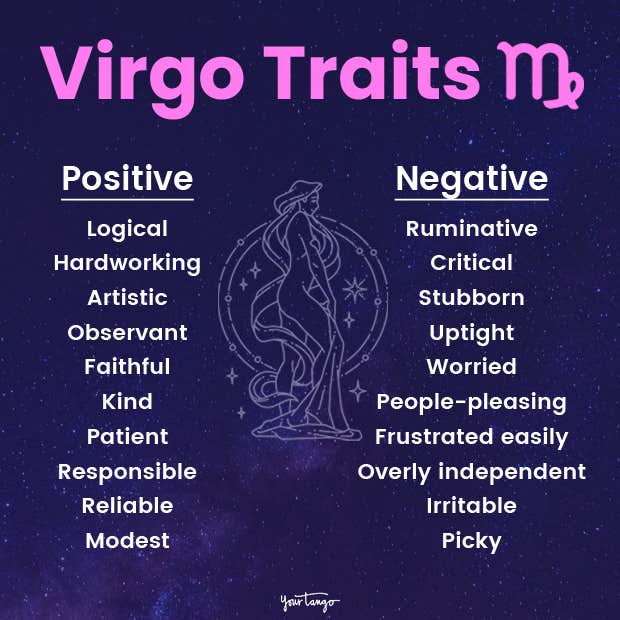
The Annoying Traits I Logged (My First Data Set)
- The Relentless Critique:
You’d show him a finished landing page—something a client was ready to pay for—and instead of saying, “Looks good,” he’d spend forty-five minutes talking about how the CTA button’s shade of blue could be slightly more optimized. It wasn’t constructive; it felt like he was just trying to prove he was smarter than you. That constant judgment made me dread showing him anything new. It stalled us big time. I practically went deaf listening to the tiny, unnecessary corrections all day.
- The Perfection Paralysis:
He was so focused on making every single detail utterly perfect that he could never press the launch button. We had a minimum viable product ready to go, solid, totally sellable, for three months. Three months! He kept rewriting the “About Us” page copy because it lacked “necessary emotional resonance.” I was pulling my hair out. Good is better than perfect, man, especially when you need money coming in.
- The Worry Spiral:
A client would send a simple email asking for clarification on a timeline. My response would be a quick, two-sentence reply. His response was three hours of pacing around the office, imagining the worst-case scenario: “What if they sue us? What if the server crashes? What if they meant Tuesday, not Thursday?” I mean, come on. That anxiety was contagious and it was exhausting to watch, let alone deal with.
- The Cold, Flat Affect:
One time we landed our biggest client ever. I was ready to high-five, maybe grab a pizza. He just looked up from his monitor, sighed, and said, “Okay, that’s done. Now we have five more projects to worry about.” No celebration. Zero enthusiasm. It made me feel like my hard work just wasn’t important to him, and honestly, it sucked the fun right out of the room. It was like living with a perfectly calibrated robot.
- The Micromanagement Habit:
I’d have a task, something I’ve done a hundred times before. He’d give it to me, then five minutes later he was standing behind my chair, watching my mouse cursor move. “Are you using the standard naming convention for that variable?” He’d ask. Dude, trust me or do it yourself. That constant hovering made me slow down just out of spite, and it killed my flow.
My Practice: Fixing Them by Adjusting Me
After observing the patterns, I designed my own little mental handbook—my “Matt Management System.” These weren’t fixes for him, they were boundaries and strategies for me. They worked like a charm and they are surprisingly simple.
First, for the relentless critique, I established a “Decoy Criticism” strategy. Before showing him the main thing, I’d show him a tiny, irrelevant detail I knew he’d latch onto—a slightly messy folder structure, an obscure tag placement. He’d spend all his critical energy on that one decoy, feel productive, and then look at the real work with less fire. He got to feel superior, and I got my work approved faster. Win-win.
For the perfection paralysis, I just introduced “The Deadline Snatch.” I started telling him everything was due 48 hours earlier than the real client deadline. When the fake deadline hit, I would literally close his laptop, say “It’s good enough, client is waiting,” and hit send myself. Sometimes you just have to forcibly pull the rip cord.
The worry spiral needed a short-circuit. Whenever he started listing the catastrophic possibilities, I immediately interrupted and asked, “Okay, but what is the very next thing we can do right now, in the physical world, to prevent that?” I didn’t engage the emotion. I forced him onto a tangible, single step. It broke the loop instantly.
The cold, flat affect? I stopped seeking his approval. I bought my own damn pizza when we hit a milestone. I celebrated with friends or just myself. I lowered my expectation for emotional return from him to zero. It took the power away from his indifference, and suddenly it didn’t bother me anymore because it wasn’t about me; it was just how he was wired.
And finally, the micromanaging. I set up a “Scheduled Reporting Time.” I told him, “I will be working on this entirely separate from you until 4 PM. At 4 PM, I will show you everything and we can review.” When he came over earlier, I just pointed at the clock and said, “It’s not 4 yet. I’m focusing.” Establishing that clear boundary finally taught him that the best way to get quality work from me was to just let me do my job.
We eventually parted ways—amicably, actually—and I kept the small business going. I survived the Virgo experience. I came out of it with a toolkit for dealing with overly critical people in any situation. That little practice I forced myself into, tracking and troubleshooting annoying personality types, was honestly one of the most useful things I’ve ever done.