
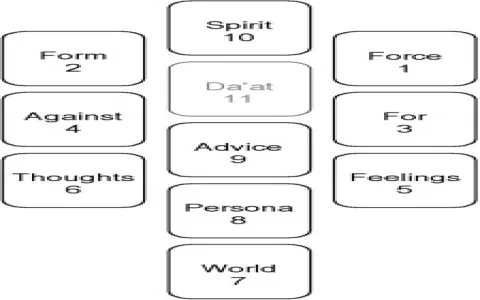
Man, the Celtic Cross spread. Every single beginner book shoves this thing down your throat. Ten damn cards. Ten different meanings. I swear, the first time I looked at the diagram, I thought, “This is a damn spiral graph, not a reading.”
I busted my ass trying to memorize the textbook crap. The books tell you to learn all ten slots: “The self, the obstacles, the conscious, the unconscious, the past, the future, the attitude, the environment, the hopes and fears, and the outcome.” It sounds great in theory, but when you’re staring at three Major Arcana cards and you’re trying to figure out if The Tower in the “immediate future” position means your house is burning down or you’re just going to change jobs, all that fancy wording just turned into noise. I’d pull a reading for myself—usually about some messy work situation or why my dating life was a swamp—and the meaning of the positions just evaporated the second I looked at the actual cards. Total waste of time and energy.
I hit a wall a few years back. Not going into details, but it was the kind of crisis where I was staring at a massive financial mess and I didn’t even know which direction I was walking. I wasn’t doing this tarot thing as a fun hobby anymore; I needed a goddamn compass. I needed to see the shape of the disaster I was standing in, not just read ten separate facts about it.
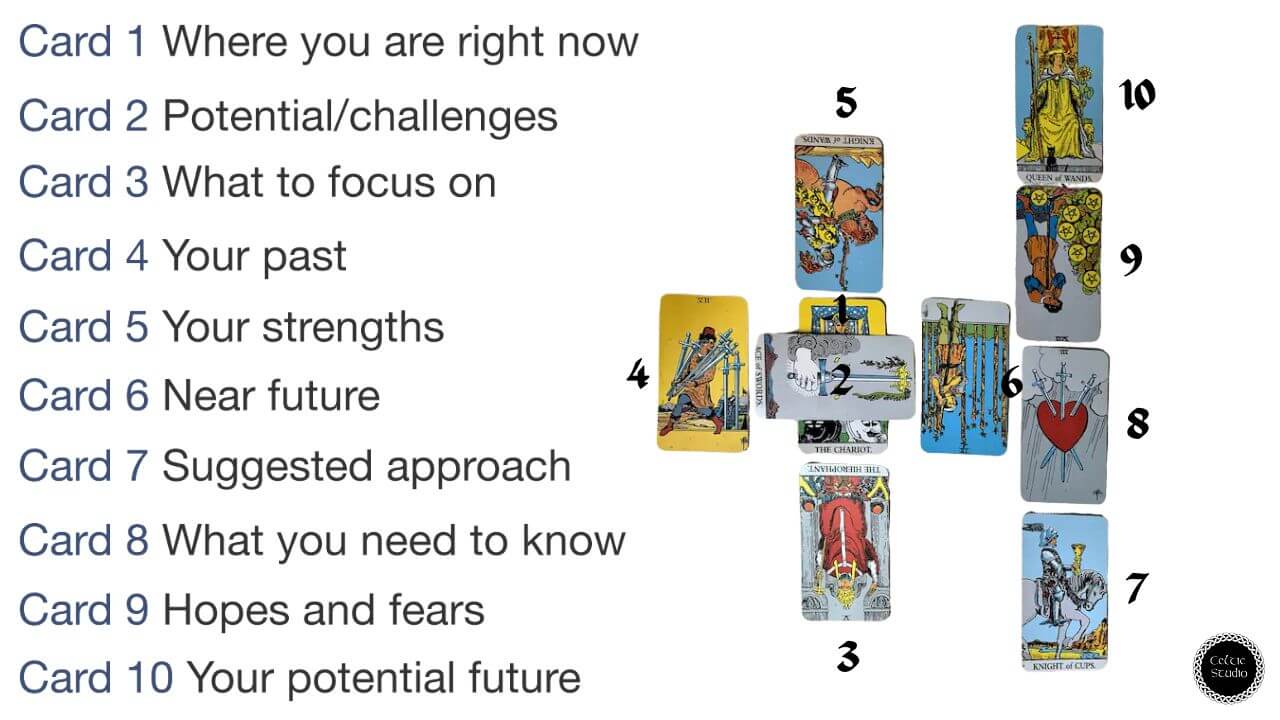
I must have done the Celtic Cross five times in one night, asking the same question and getting five different versions of high-school-level confusion. My head was pounding. That’s when I tore up the notes and just decided to tell myself a story. I threw out the flowery language and made the positions simple, almost primitive. It was the only way my burnt-out, stressed-out brain could process the information without completely short-circuiting.
I Threw Out the Jargon and Started Telling a 10-Step Story
This is the story structure I finally nailed down. It’s not fancy. It’s just how my brain started gluing the pieces together, from the core mess to the final result.
- Position 1: The Core Mess. I stopped calling it the “Significator.” This card is simple: What the hell is happening right now? The main theme. It sets the whole damn stage.
- Position 2: The Block or Boost. What’s right across that core mess? Is it helping me, or is it stopping me cold? This card either makes the first card easier to deal with or a thousand times harder. I look for the action this card is taking on the first one.
- Position 3: The Root. I called this the “Deep Why.” Look back. Where did this crap start? This is the foundation, usually something subconscious or from the deep past. I dug into this card hard because it gives you the damn source.
- Position 4: The Immediate Past. This is the part of the story that’s just ended. What have I been walking away from, or what lesson did I just pick up? It’s the energy that is fading out.
- Position 5: The Near Future. What’s coming up next? This is the short-term forecast. It showed me the speed bump before I hit it, usually within a few weeks.
- Position 6: The Long Future. This is where the whole situation is heading if I keep doing exactly what I’m doing now. It’s a fast warning sign, a possible outcome, not fixed destiny.
The next four cards, the staff on the right, they are different. They are the outside world and the final result. I treated these four as the advice column.
- Position 7: My Boots. How do I feel about the whole shebang? This is all about my own attitude, my inner fear, or my strength. It’s my contribution to the mess. I checked my gut feeling here before moving on.
- Position 8: Their Eyes. How does everyone else see this? My family, my boss, the general consensus—it’s the external world’s view. It often points out where I’m blind to other people’s problems or perceptions.
- Position 9: The Hopes/Fears Pile. I called this the “Naked Truth” card. What am I really wishing for, or what am I absolutely terrified of? I always felt a punch in the gut when this card came up. It’s the driving force behind my actions.
- Position 10: The Result. Where the damn road ends. This is the synthesis. If I keep all this in motion, and I listen to the advice of cards 7, 8, and 9, this is the destination. I paid the most attention to this one because it tells you if the struggle was worth it, or if I need to shuffle and ask again after I change something.
I practiced this simplified flow for six months straight. Every single reading I did for myself or for friends, I ran it through that story structure: What is it? What’s blocking/helping? Where did it come from? Where is it going? And what are the people involved thinking?
The moment I stopped reading the positions as ten separate bullet-point definitions and started seeing them as a timeline—the present mess, where it came from, where it’s going, and how everyone feels about it—that’s when it all clicked.
Forget the old books and the fancy diagrams. Just tell yourself the story. It’s not about memorizing ten words; it’s about reading the ten steps you took or are about to take. Now, I use this simplified approach for everything. My readings are quicker, clearer, and I actually get advice I can use instead of just confusing philosophy. Give it a try. Stop reading and start feeling the flow. It’ll change your game. Trust me on this one.