


Man, so I’ve been kicking around this idea in my head, right? About how some folks talk about Virgo women. The whole “control freak” label. I mean, I’ve seen it, felt it, lived it. And it’s not always about trying to be a jerk, but damn, it can feel like it sometimes.
I remember one time, I was trying to help out with a dinner party. Just a simple get-together, nothing fancy. We were supposed to be casual, you know? Just throw some stuff on the grill, open a few bottles. But she, a good friend of mine, a Virgo through and through, had a whole schedule laid out. I’m talking about a minute-by-minute plan.
First, I watched her meticulously clean the kitchen. Not just wipe down counters, but scrub the grout, polish the faucet until it gleamed. Every single pot and pan had to be arranged by size, by color even, in the cupboards. I offered to help, reached for a cloth, and got a look that said, “Bless your heart, but you’ll only make it worse.” She then showed me the correct way to wipe a surface. My method? Apparently too haphazard, too many circular motions. It had to be straight lines, from top to bottom, with overlapping strokes to avoid streaks. My brain just about short-circuited trying to keep up with that level of detail for a dinner prep.
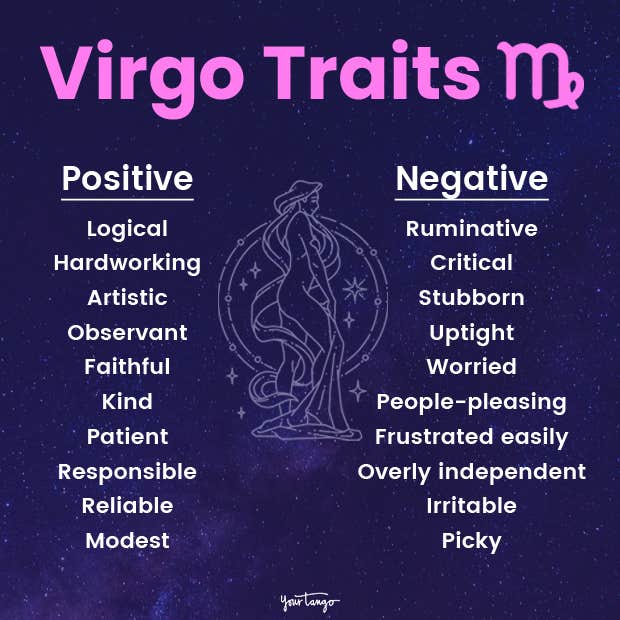
Then came the actual food. I thought I’d be in charge of the salad, something easy. Chop some lettuce, slice some tomatoes, toss it with dressing. Simple. Oh, no, no, no. I pulled out the lettuce, and she immediately swooped in. “Did you wash it properly? Each leaf needs to be separated. And dried. Completely dried, otherwise the dressing won’t stick.” She showed me how to use a salad spinner, then how to lay the leaves out on paper towels to air dry for another five minutes, then carefully pat them. I was just like, “Dude, it’s just a salad.” But to her, it was a component of a perfect meal, and every component had to be perfect.
- She inspected every tomato for blemishes.
- Measured out the exact amount of olive oil for the dressing.
- Insisted on tearing the basil leaves by hand, “because cutting bruises them.”
It wasn’t just about the food either. The table setting. I put out some plates and forks. Casual, right? Wrong. She pulled out a measuring tape, no joke, and adjusted every single plate so it was an exact distance from the edge of the table. Every fork, knife, and spoon had to be precisely aligned. The napkins had a specific fold. I just stood there, my jaw probably on the floor, watching this unfold. I tried to move a glass slightly, just to see what would happen, and she was on it like a hawk. “No, no, that’s not right. See? It’s off by a millimeter.”
The Project That Never Ended
Another time, it was a work project. We had to collaborate on a presentation. I had my part, she had hers. I put my section together, pretty solid, thought it was good to go. Sent it over for a review. Man, the feedback I got back. It wasn’t just minor edits; it was a full-blown reconstruction. Every font, every color choice, every spacing, every bullet point. All had to adhere to her vision of perfection.
She’d tell me things like:
- “The line spacing here feels… heavy. Can we tighten it by 0.5 points?”
- “This shade of blue just isn’t quite right. It needs more green in it.”
- “Your word choice on slide seven could be more… impactful. I’ve rephrased it for you.”
And she didn’t just suggest; she’d often just do it herself, then present it back to me as the “improved” version. It wasn’t about my input being wrong; it was about her needing it to be her kind of right. I felt like I was just a pair of hands executing her intricate design, not truly collaborating. It was exhausting trying to meet an unspoken standard that was constantly shifting, always a hair’s breadth away from what I had delivered.
Sometimes, I’d intentionally leave a tiny, almost unnoticeable error, just to see if she’d catch it. And damn right, she always did. Like a human spell checker and design auditor rolled into one. It wasn’t malicious, I truly don’t think it was. It just felt like she had this internal blueprint for how everything should be, and anything deviating from that caused a real, palpable discomfort for her. That’s when it clicked for me. It wasn’t about being mean or bossy; it was about a deep-seated need for order, for things to be predictable and perfect.
If things went off-script, even a little bit, you could see the anxiety bubble up. A wrinkle on the table cloth, a late guest, a mispronounced word – it was like a tiny crack in her perfectly constructed world. And she’d jump to fix it, to smooth it over, to bring it back to that ideal state. It’s a lot of pressure, I imagine, living with that constant internal editor. And it can be a lot of pressure for anyone around them, too. It makes you feel like you’re constantly under a microscope, or that your efforts are never quite good enough. You just gotta learn to roll with it, or run far, far away.